Musings about our farm, organic farming, regional foods and markets.

Plus, what's in the news about foods, systems and regulations around the world.

Showing posts with label guatemala. Show all posts

Tuesday, February 26, 2019

Andrea y Chico


First we met Chico as we arrived in Pachitulul, a small Mayan village outside San Lucas Toliman on Lake Atitlan in the Guatemalan Highlands. He was sitting barefoot on a bench, resting from toil in his field. He told us he has a wife, Andrea, and six girls. This evening he came by to offer us tomatoes, lettuce, cabbage, parsley, and celery. Conversation led to details about our family and his. We were astounded to hear that he has an Andrea (his wife), and a Cristina and another Andrea among their six daughters, just as Gundi has these two as daughters along with Claudia. Their other daughters go by the names of Maria,Isabel, Rebecca, Liliana. 


Buoyed by Chico's sale of fresh vegetables to us, Andrea and Liliana came by an hour later under cover of darkness and tapped on the kitchen window. They were carrying three big baskets of hand-woven textiles Andrea had made and proceeded to extract a huge, vibrant assortment of clothing and decor, all beautifully and uniquely fashioned and created. Not now, later, Gundi re-iterated over and over as they unfolded more and more. Another time. Later. We are cooking...


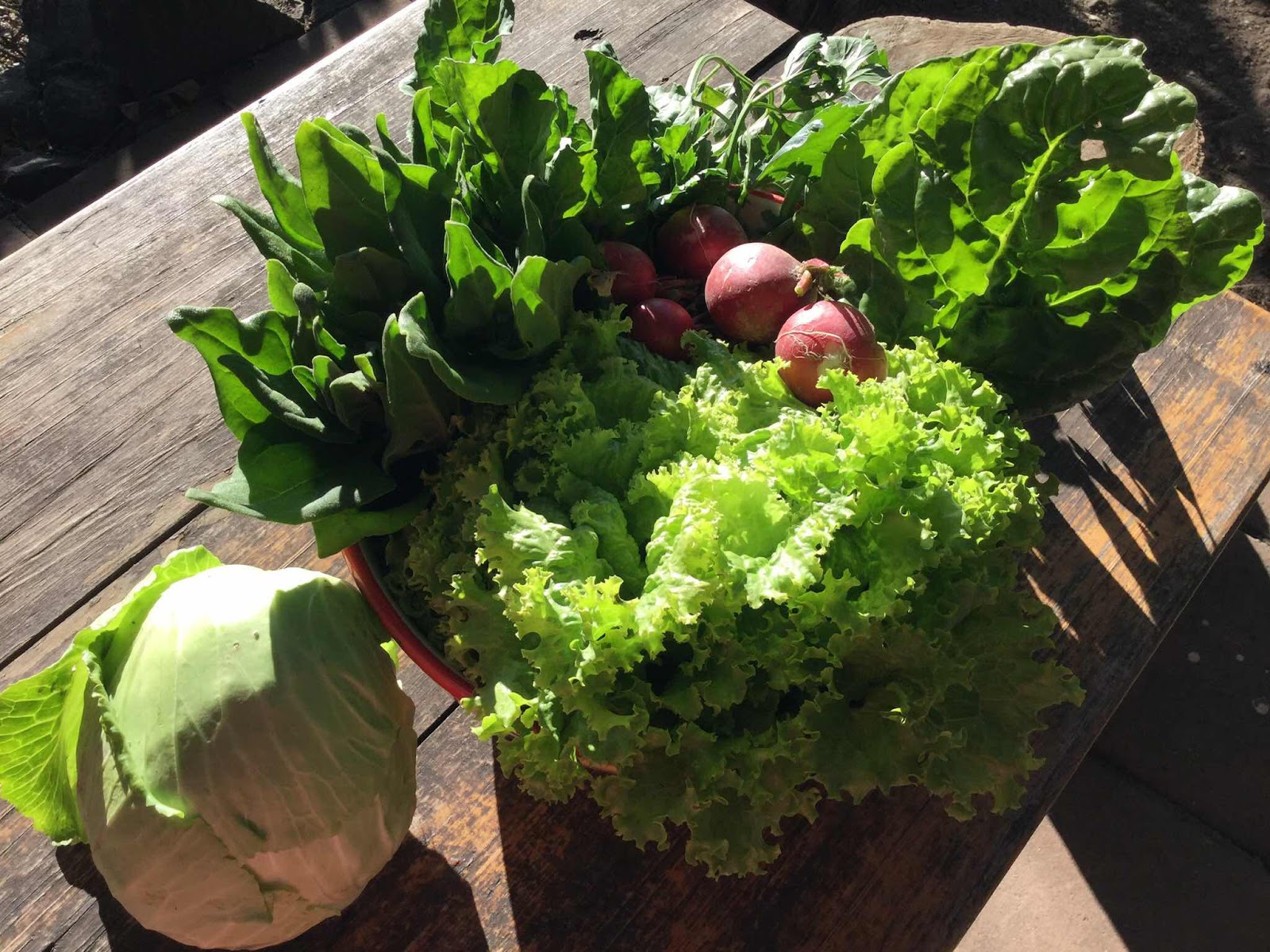
Chico duly came by with a huge bag of lettuce, radishes, arugula, celery, tomatoes, parsley, and cabbage. He sat down, chatted as we peppered him with questions about the community and its history. Yesterday's marimba band concert was apparently attended by around a hundred locals, and celebrated the recovery from illness of a village member. "How old are you?" he asked Gundi... "... and you?" I countered. "Fifty two". "Ten years younger than me", I confessed. When pressed on the cost of the five pounds of vegetables, freshly picked from his garden, he shyly said twenty quetzales (around three dollars). "Cheap, no?", he joked. When I gave him thirty, he was very grateful. "Expensive, no?", he joked. The next morning he came by, as promised with fresh epazote and purple basil to make a tummy tea for Gundi. Ten quetzales were gratefully tendered and received.

w


After I reminded Andrea about coming over with a shirt for me, she appeared on a Sunday morning with daughters Maria, Liliana, and Andrea, and three baskets of textiles. I picked out a subtle purple, green and orange shirt that Gundi approved of, and, lo and behold, it fit,with just the hood for Gundi to cut off. Andrea asked for 300 quetzales and settled for 250; we were all happy with the deal, which is the main thing. Too many tourists show no dignity in seeing haggling as a sport by which to belittle the seller and back-slap their own powers of persuasion in a display of cultural imperialism.


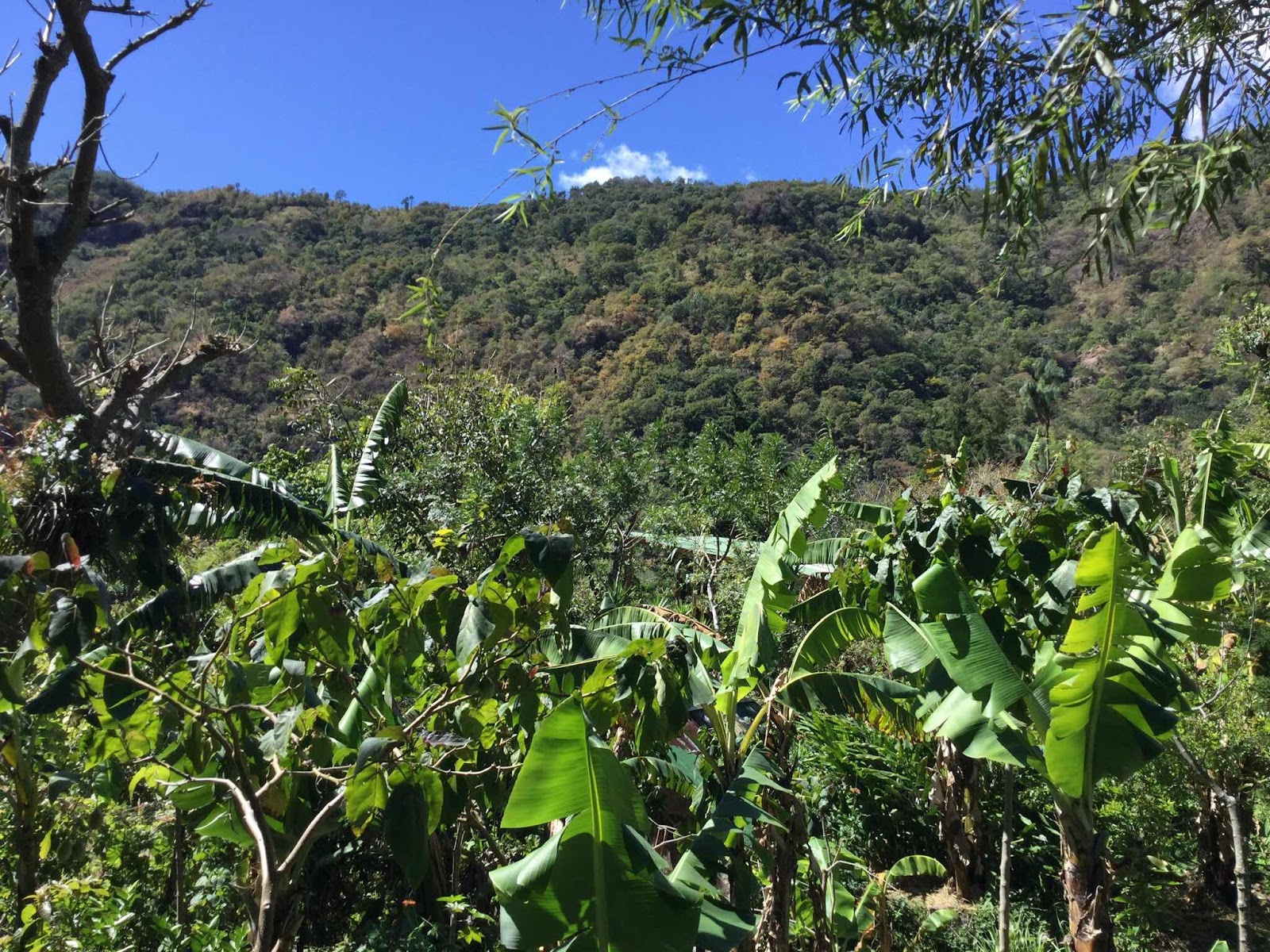
Chico is one of eight local farmers that rent land from IMAP, the *Instituto Mesoamericano de Permacultura*, in exchange for seeds that they grow. Chico saves a black corn, tomatoes, arugula, carrots, beets, chard, celery, parsley, lettuce, cabbage, spinach, and more. In addition, some early mornings well before the sun gets up, he and his two dogs walk an hour up the mountainside of Toliman volcano to tend his corn, coffee, peaches, bananas, and lemons. Ah, the life of a campesino - hard but gratifying; this and the physicality, sensuality, fresh air, sun on skin, and communion with nature, which have in concert provided me with so much enjoyment over the years. As we return home and then start a new chapter on the ocean in Cape Breton, I will miss Rolling Hills Organics, the farm and the farming vocation. The sowing of seeds, the changing of the seasons, the planting of seedlings, the turning and nurturing of soil, the harvesting of greens, the pulling of root crops, the selling at markets have, after all, granted me a happy living and sustained me in good health for the last two decades. 


Saturday, January 27, 2018

Atitlán Organics


The road up to Atitlán Organics from the lake through Tzununá past the Bamboo House up the stony dirt road to the farm is an arduous one. One needs to be dedicated to a sense of discovery and exploration to undertake it. As a form of pilgrimage to the principles of permaculture, I was determined to pay a visit. Friday mornings are scheduled for farm tours. As a group of overnighting local schoolkids wrapped up their time with excited babble, we twenty or so visitors waited in the wings, discussing our own interests and vocations - in organic farming, in seed-saving and sharing, in permaculture, in volunteering, in travelling through Guatemala and Central America....


After our stand-by, Shad was ready. Shad Qudsi hails from New Jersey. He and his partner Colleen from Rhode Island are celebrating the eighth anniversary of founding Atitlán Organics, up in this peaceful, Eden-like valley of lush fruits, greenery, plants, crops, with a heavy smattering of large rocks and boulders. The background symphony of sounds includes birds, chickens, dogs, the whistling breeze, all subsumed by the cascading waters of the river and waterfalls. The year-round flow of the river is rare for these parts where the long dry season succeeds the rains of the summer months (wet season). It is a principal reason for Shad choosing this rocky mountain-side site on which to bring his dream to life. It is a work in progress and yet much has been achieved over these first years through hard work and a headstrong steadfast vision for the future.


The enterprise that is Atitlán Organics is divided into three areas - the permaculture farm, educational courses of learning, and accommodations and restaurant. Volunteers work on the farm and stay at the Bamboo House. Visitors too eat and drink at the restaurant and support farm tours by donation. Courses teach permaculture and natural building techniques.


The farm consists currently of around two and a half acres - over a hectare - of mountain-side fields, fruit trees, and animal shelters. The challenging terrain has been very painstakingly and gradually cleared of rocks, channeled by swales, and dotted with ponds, creating habitat for a whole micro-environment of mixed plants, trees, crops, and livestock habitat.  Chickens and goats have access at different times to thirteen separate eco-systems in miniature and provide the farm with ample rich compost from the barns that continually builds fertility in the terraced fields. They also provide between them eggs, meat, milk, cheese, yogurt. Fruit trees include mulberry, banana, mango, orange, papaya, pomegranate, soursop, and, of course, coffee. Shad is focusing on salad greens as a viable and reliable source of income and two local helpers Nicolas and Juan prepare for local deliveries to stores and restaurants twice a week.


As a salad green grower myself, I was very taken by the manual salad spinner, consisting of Nicolas windmilling his arms forward and back out in the garden. (My left shoulder would not last long with the repetitive strain). Production is expanding and the nearby village of San Marcos with its base of travellers, yoga practitioners, and worldly seekers is a ready market hungry for fresh local organically-grown produce. Given the ambient climate of the lake, production can be moreorless year-round. Shad explained that the farm's situation deep in a steep-sided valley means that it enjoys less hours of sunshine than most locations. So it is that some sun-hungry crops like tomatoes and peppers have not thrived. And the altitude of over 5,000 feet above sea level creates further restrictions for certain crops.


Hats off to Shad, his local staff and his army of ever-changing volunteers for creating such an inspiring model for community living and sustainability using the solid principles of permaculture and human resiliency in this beautiful yet challenging highland lake environment. Long may it prosper and continue to grow.


www.atitlanorganics.com


www.facebook.com/atitlanorganics


www.youtube.com/atitlanorganics

Friday, January 19, 2018

Mountain-side Terraced Fields


Santa Catarina Palopó


Yesterday we visited the Mayan town of Santa Catarina Palopó. Many buildings are newly daubed in elaborately-patterned sky blue reflecting the traditional huipil colour worn by the women. This is an initiative begun last October to make the town more attractive to visitors and it certainly does the trick.


The mountain-side terraced fields perched high above the town are spectacular. The climb up steep steps past the upper residential area rewards with breath-taking views as one enters the expanse of vegetable and flower fields situated in a gentle valley bowl. Up there, on a fine, sunny, breezy day, I felt on top of the world, blown away by the beauty and ingenuity of the landscape. There are probably around 20 acres of meticulously-designed fields constructed into terraces and separated by channels for water to flow. Even now, in dry-season, water gurgles down the mountain-side in a meandering flow. Sluice gates control the side-flow into fields. One friendly field-worker (OK, all the locals are friendly) was controlling the flow of water with his foot as he prepared his field for bean planting by turning it over with a spade-like hoe. You cannot tell me that turning over the soil after winter dormancy is not good practise. These Mayans have been cultivating this land constantly for centuries, achieving prolific production always, rotating crops from field to field. The Mayan empire is long gone, of course, but these descendants continue the fine engineering and farming methodologies their forebears introduced. Their fine-tuned tweaking of nature is an inspiration.


On this day, on cursory glance, we witnessed corn, squash, tons of onions, beans, avocados, lettuce, almonds, yucca, oranges, papaya, chrysanthemums, lilies. Apparently, most produce is destined for the local big town market of Sololá. I was told that crops are organically grown, but they do use a small amount of pesticides against troublesome bugs. I noted about twenty farmers tending the fields, men and women. They use only hand tools and every harvested item is carried down the mountain on their backs. We watched as full sacks of corn and firewood were being carried down, empty as they come back up.


A huge swathe of mountain-side that is tinder-dry grass (denuded of greenery) was just left burned off by a fast-moving fire above the town a couple of weeks ago. Deforestation of these steep slopes creates such problems; thankfully, there is a lot of intact forest remaining around Lake Atitlán, especially on the iconic volcano sides.


Our twenty-minute ride back to Panajachel was in the back of a pickup track colectivo. The bench seats held mostly local townfolk, the women shy and reserved in their Santa Catarina-blue huipils, the men in their traditional textile shorts and sandals, the children gazing at us with curiosity. They are such sweet folk, always ready with a smile and warm greeting. The ride cost 3 quetzals, less than 50 cents, each.