Musings about our farm, organic farming, regional foods and markets.

Plus, what's in the news about foods, systems and regulations around the world.

Tuesday, December 20, 2011

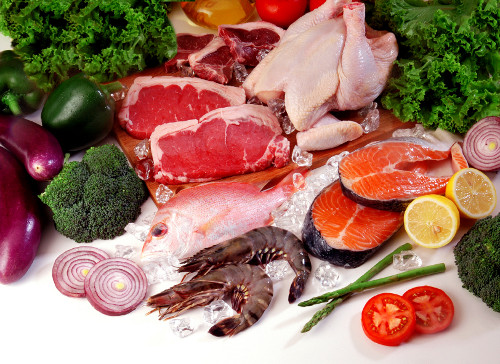
Grass-fed beef is more nutrient dense than poultry

                                 Photo from www.libertydexters.co.uk

As our customers are aware, you can purchase grass-fed, grass-finished beef from Dexter cattle at our stand at the Toronto Evergreen Brickworks on Saturday mornings. While the market runs year-round, we will be taking a winter break in January and February, back in March 2012.

Tuesday, December 20, 2011 by Dr. David Jockers
(www.NaturalNews.com) For over 60 years, red meat has been vilified for its heart clogging saturated fat & cholesterol content. Poultry products have been marketed as the healthiest animal protein due to their low-fat content. New understandings of health and inflammation now reveal that grass-fed beef is significantly more nutrient dense than poultry.

Saturated fat and cholesterol have been blamed for heart disease and other cardiovascular diseases. Research indicates that saturated fats and cholesterol are necessary for overall cellular health. They play an extremely important role in regulating neurological, cognitive and hormone function. A diet low in these important fats causes lowered immunity, sex hormone function and accelerated aging and brain degeneration.

Red meat could be one of the best foods in an individual's diet or one of the worst. The key factor is what the animal is eating. Naturally, cows eat a near 100% green diet of grass, flowers, shrubs and other wild vegetation. Grain feeding is genetically incongruent for these animals and leads to excessive weight gain and fat accumulation.

Fatty Acid Ratios

The typical grain-feed is made up of corn and soy due to the low cost associated with government subsidies. Grain-fed cows are extremely high in omega 6 fatty acids. The average ratio for a cow on a grain-fed diet is roughly 25:1 (omega 6:3).

Humans should naturally have an omega 6:3 ratio around 4:1 or 2:1. When these ratios become skewed, they trigger cellular inflammation and accelerated cellular degeneration. This environment causes an individual to become highly inflamed and to build degenerative disease.

The more grass an animal eats the greater their omega 3 content and the lower their omega 6 levels. A 100% green-fed diet, which is genetically congruent for a cow would provide an omega 6:3 ratio of 2:1. This is ideal for the animal's long-term health and is highly anti-inflammatory for human consumption. The omega 3 fatty acids present in this meat are primarily the all-important long-chain variety EPA and DHA.

Chicken and turkeys cannot live on grass alone. They lack the highly specialized digestive tract that allows them to convert grass and roughage into a quality meal. They need some addition to grass and the vast majority of farmers choose to feed them a mixture of soy and corn. Chickens can get about 25% of their calories from grass while ducks can go up to about 50%. The higher the level of grass, the higher the anti-oxidant and omega 3 content of the meat and eggs.

Grass-fed mammals contain high levels of conjugated linoleic acid (CLA). CLA is considered to be one of the most potent anti-carcinogenic nutrients. Finnish researchers have found that the greater the amount of CLA in a woman's diet, the lower her risk of breast cancer. Women who consumed the largest amount of CLA had a 60% lower risk for breast cancer.

Grass-fed mammals are also extremely rich in carnitine and carnosine. Carnitine helps the cellular mitochondria drive energy efficiently from fat metabolism. Carnitine is the critical gate-keeper that allows fatty acids to pass into the mitochondrial furnace effectively. Carnosine is a powerful antioxidant that improves muscle, brain & cardiovascular function. It functions to reduce the effects of stress by protecting the proteins of the body which aid in tissue healing and repair.

Poultry has significantly less CLA, carnitine and carnosine than grass-fed beef. Beef also contains a lot more branched chain amino acids. This includes the crucial muscle building amino acid leucine. Grass-fed beef has an enormous edge over free-range poultry when one compares the fatty acids, proteins, fat-soluble anti-oxidants and minerals such as zinc.

Thursday, December 8, 2011

Put the Fat Cats on a Diet: Stop Buying Tainted Food From Billion Dollar Corporations


 In recent years there has been much progress in education about the corporate-controlled industrial food system. Documentaries such as Food Inc, Our Daily Bread, The World according to Monsanto, Supersize Me, Fresh – the Movie, Food Matters all help in our understanding of what is at stake, and that is our health and personal freedoms. Here, Ronnie Cummins of the Organic Consumers Association adds his strong voice to ways we can all contribute in bringing about positive change, and not just in the United States.

By Ronnie Cummins
December 7, 2011

"I have not spoken to one farmer who doesn't understand the message of Occupy Wall Street, the message that so many people keep saying is nebulous. It's very clear. Because of business and corporate participation in agriculture, farmers are losing their livelihoods   And if it goes on like this, all we're going to have to eat in this country is unregulated, imported, genetically modified produce. That's not a healthy food system." - Jim Gerritsen, a Maine organic farmer.

For the first time since the late-1960s, the American elite and their indentured politicians are losing legitimacy, part of a deepening global crisis that is simultaneously political, economic, and ecological. In the powerful wake of the 2011 Arab Spring, the European Summer of the indignados (the indignant ones), and the Occupy Wall Street movement, rebellion is in the air. As protestors in New York put it "The one thing we all have in common is that we are the 99% that will no longer tolerate the greed and corruption of the 1%."

Across the U.S. and planet, the corporate elite is under attack. An emerging army of indignados are starting to act on the premise that minor policy adjustments in corporate boardrooms, or a cosmetic reshuffling of faces in Washington, are not enough. What the Earth and the 99% underclass need, including consumers and farmers, is a grassroots revolution - a fundamental transfer of power from the corporatocracy to the people. What is required in the face of economic meltdown, deteriorating public health, and climate disaster is a full-scale mutiny on the USA Titanic, a radical change of course before the 21st Century suicide economy of Wall Street and Corporate America puts an end to the human species and life on Earth.

Perhaps the first order of business on the USA Titanic is to stop stuffing money in the pockets of the greedy 1% who are steering us toward disaster. This is why a million consumers, and thousands of community organizations, unions, and churches, have started to strike back against the "banksters," staging sit-ins and protests and moving billions of dollars out of Wall Street and the big banks into community credit unions and local banks. As the internet campaign MoveYourMoneyProject.org proclaims, it's time to "invest in Main Street, not Wall Street, and to lend a hand to local businesses."

Following a similar trajectory a debtors' campaign is gathering steam among students and ex-students to stop paying their onerous student loans, which now total one trillion dollars, and demand the implementation of a federal program of free college tuition and jobs for youth and the unemployed.  Approximately 11% of student loans in the U.S. are already in arrears. Similarly, millions of Americans are turning away from Big Pharma's drug pushers and embracing holistic, preventive medicine.

The time has come for America's 300 million food consumers to join the mutiny. Our trillion dollar food and farming System has been corrupted and manipulated by Wall Street, Corporate Agribusiness, and Big Food Inc. into what can only be described as a weapon of mass destruction, severely damaging public health, the environment, and the climate; torturing animals in filthy, disease-ridden factory farms; exploiting immigrant farm workers and food industry workers; and destroying the livelihoods of small farmers and rural communities.

As the first official Declaration of Occupy Wall Street explained on September 29: "They have poisoned the food supply through negligence, and undermined the farming system through monopolization."

Food Democracy or Corporatocracy?

Did you ever vote to allow corporate agribusiness to spray a billion pounds of toxic pesticides, and dump 24 billion pounds of climate-destabilizing chemical fertilizers on U.S. crops and farmlands every year? Did you give the OK for factory farms, so-called Confined Animal Feeding Operations (CAFOs), to feed billions of hapless creatures massive amounts of genetically engineered grain, antibiotics, hormones, steroids, blood, manure, and slaughterhouse waste? Did you give Monsanto, Dow, and Dupont permission to "modify" so-called "conventional" supermarket, school cafeteria, and restaurant food with genetically engineered bacteria, viruses, foreign DNA, and antibiotic-resistant genes? Did you sign a permission slip for the USDA or your local school system to feed students, including your children, greasy, fatty, unhealthy, chemical food in the cafeteria?

If we intend to break the stranglehold of the corporatocracy over the economy, including what and how American farmers grow and what most people eat, it's time to stand up. If we believe that a healthy, organic, and equitable system of food and farming are essential to our health and the health of the planet, we need to think twice before we pull out our wallets at the supermarket or sit down for a meal in a restaurant or a fast food joint. Do you want to be supersized by Monsanto, Wal-Mart, or McDonald's, and allow biotechnocrats, factory farms, and chemical food manufacturers to dictate your food choices?

It's time to vote with our food dollars at the grocery check-out aisle. It's time to rein in elected public officials who take money from corporate agribusiness and Monsanto in the voting booth. It's time for the Great Boycott of Big Food Inc., and a culinary strike against all of their chemical, genetically engineered, sugar, and fat-laden processed foods and beverages. It's time to put the fat cats on a diet, shrink the profits of Wall Street, and drastically reduce the collateral damage of chemical agribusiness, Big Box food stores, and billion dollar junk food restaurants. It's time to Occupy our food chains, kitchens, lunchrooms, and school cafeterias, and transform our $30 billion local and organic food and farming system from being the niche alternative to being the norm in the nation's trillion dollar food economy.

The good news is that most people already know that chemical food is bad for them, bad for their children, and bad for the environment. No one wants to eat Big Ag or Big Biotech's pesticide residues, antibiotics, hormones, or feces-tainted meat. No one is enthusiastic about food that has been irradiated, genetically engineered, or grown with municipal sewage sludge. A recent national poll found that 54% of Americans prefer organic food, especially locally-produced organic food. Millions say they'd buy more organic products if only they had a decent paying job, or less mortgage, medical, or school loan debt. That's partly why millions of us are becoming backyard organic gardeners, or small "market farmers" growing our own. That's why a new generation of food lovers and health addicts are swearing off corporate food and marching to the kitchen, cooking from scratch and celebrating the joys of home-cooked fare with our friends and our families.

Millions of us are starting to break the chains of corporate control in our lives, by supporting organic, fair made, and locally produced products and businesses.

Tired of the quality and range of our daily essentials being dictated and degraded by a powerful network of Brand Name Bullies and Big Box chains? Tired of profit-at-any cost, Wall Street-traded corporations "outsourcing" from sweatshops in the factories and fields, cutting corners on public health and the environment, and sucking up billions of dollars in taxpayer subsidies? " Basta," enough already.

Make your pledge today to put the fat cats on a diet. Buy organic and fair made/fair trade products, preferably locally produced. Boycott factory farmed meat and animal products. Eat more raw food, dairy, and vegetables. And if you can, start growing some of your own, even if for now, your "garden" only consists of potted herbs or tomatoes on your window sill or a sprout-making machine in your kitchen. And finally, keep in mind that where you buy a healthy, sustainable product has a very large impact on the economy, the environment, and climate stability. Do you really want to buy your organic food or your fair trade coffee from a multi-billion dollar corporation like Wal-Mart, Safeway, Starbucks, or even Whole Foods Market and Trader Joes?
 
Ronnie Cummins is the co-founder and National Director of the Organic Consumers Association.

Thursday, November 3, 2011

"Paleo" foods

At Rolling Hills Organics, our regular customers will be aware that we aim to bring to market only the freshest foods, high in nutrition. These include fresh-picked certified organic greens and other vegetables, herbs. We also provide grass-fed, grass-finished (never any grain!) beef from small-breed Dexter cattle. It turns out that all these products fall within the “Paleo diet”. To learn about the real health benefits of only organic and unprocessed food, read on in this fascinating article from Natural News…

                           Photo from http://paleodietlifestyle.com

by Ethan A. Huff, staff writer
(www.NaturalNews.com)

The so-called "Paleo" diet has caught on like wildfire, with millions of people around the world embracing it for both weight-loss and health-promoting purposes. The diet has become so popular, in fact, that a new restaurant in Germany now serves only paleolithic food, which excludes popular modern-day foods like cheese, bread, and sugar.

The UK's Daily Mail reports that Sauvage, which recently opened in Berlin, serves only organic, unprocessed food. Various fruits and vegetables, meat, fish, eggs, nuts, seeds, and herbs fill the pages of the restaurant's menu. Customers will not find the usual wheat-based breads, dairy products, or refined sugar-laden treats available at most restaurants.

Diners at Sauvage do not have to worry about genetically-modified (GM) soybean or canola oil tainting their foods, either. The restaurant uses only ghee, also known as clarified butter; homemade clarified lard, which is actually far healthier than oil and butter substitutes; and unrefined palm and coconut oil to cook its foods.

All of Sauvage's fruit, vegetable, herb, nut, and seed offerings are organic, and its gluten-free baked goods are all made with natural fruits rather than processed sugars. And as much as possible, the restaurant sources only free-range, grass-fed, organic meats.

"The paleolithic Cuisine is based on a groundbreaking vision in nutrition and offers the world's most healthy diet," says Sauvage on its website. "The prehistoric kitchen exclusively works with organic, unprocessed foods. It excludes every kind of processed food such as grains, starches, dairy products and sugar which have no place on the paleolithic menu. The basic ingredients of Paleo cooking are veggies, meat, fish, eggs, oils, nuts, seeds and herbs. All ingredients come from Organic farming or wildlife."

Last year, the Chicago Tribune hailed the amazing health-promoting benefits of the Paleo diet. Besides helping to create a strong and vibrant immune system, the diet can even cure serious diseases like arthritis and heart disease. Its claim to fame also includes improving energy levels, clearing up skin, improving hair and bone strength, and promoting mental balance (http://www.naturalnews.com/029653_p...).

"Many people think the Paleolithic diet is just some hipster trend, but it's a worldwide phenomenon, with an online community that spans the globe," said Sauvage's Boris Leite-Poco to Spiegel Online. "The trend is probably strongest in the United States, where people who have had enough of the fast food way of life and generations of illness have taken it up."

To learn more about Sauvage, visit:
www.sauvageberlin.com/

Sunday, October 2, 2011

Food Matters


By Dr. Mercola

The film Food Matters presents powerful evidence in support of the ancient wisdom that regards food as medicine, and offers practical solutions to the current health crisis.
Modern medicine has replaced nutritious foods for chemicals in the form of drugs as the preferred mode of addressing disease, with devastating results.
Nutrition alone can prevent and treat many if not most diseases, including high blood pressure, high cholesterol, autoimmune diseases, type 2 diabetes, heart disease, anxiety and depression - even cancer.

"Let thy food be thy medicine, and thy medicine be thy food."

That famous quote by Hippocrates, who is often referred to as "the father of medicine," is somewhere around 2,500 years old, and for a long time this sentiment was treated as fact. Today, many scoff at this notion, thinking nutrition and medicine have very little in common; using food to quench hunger and little else, while turning to pharmaceutical drugs to treat illness.

Turning our backs on the fundamental truth that "food is medicine" is no doubt at the very heart of our current disease epidemics.

Another quote by Hippocrates, which is part of the Hippocratic Oath still recited by modern doctors today, is "First, do no harm." Unfortunately, the preoccupation with the idea that there must be "a pill for every ill" now greatly compromises this oath, because the practice of medicine is primarily focused on drugs that oftentimes do FAR more harm than good… Meanwhile, modern doctors receive virtually no training in nutrition.

Food Matters, produced by James Colquhoun, Laurentine ten Bosch, and Enzo Tedeschi is an 80-minute long fast-paced re-education for the layman on the basics of good health, which incidentally is the only way to prevent disease from occurring in the first place. The film presents powerful evidence in support of  ancient wisdom that regards food as medicine, and offers practical solutions to the current health crisis.

What You Will Learn from this Film
As summarized on the Food Matters' website, by watching this film you will get answers to the following questions, and straight facts on:

•How you can use food as medicine
•Who needs vitamins?
•Is organic really better?
•How safe is your food?
•Foods that fight anxiety and depression
•Natural therapies for cancer
•Which drugs might do more harm than good?
•The best ways to detox, lose weight and keep it off! 

Food Matters really delivers a well-rounded view of the elements required for health, starting with the food supply itself, and the devastating effects modern food manufacturing has had on the quality of our food. Soil depletion is a direct result of modern agricultural practices, and has led to crops containing fewer nutrients. The answer, of course, lies in reverting back to organic and sustainable agriculture. The largest study conducted into organic food confirmed that the idea that organically grown foods are healthier for you is not wishful fantasy. It's a fact.

That four-year long study discovered that:

•Organic fruit and vegetables contain up to 40 percent more antioxidants
•Organic produce had higher levels of beneficial minerals like iron and zinc
•Milk from organic herds contained up to 90 percent more antioxidants

When evaluating food and nutrition it's also imperative to understand what happens to the nutrient content of a food when it is processed, and the potential harm that can be caused by added chemicals. Our food stores are filled to the brim with ultra-processed foods that not only contain ingredients grown in depleted, pesticide-laden soils to begin with, but are further depleted of real nutrients through processing; in the end providing very little beyond empty calories.

Food as Medicine
Fatigue is epidemic, particularly in the United States. In the film, Victor Zeines states that fatigue-related ailments should be viewed as "chronic malnutrition." With proper diet, fatigue is simply not an issue. Feeling "awake" and vibrantly alive is part and parcel of optimal health. Ian Brighthope also makes an excellent point when he explains that each day you neglect nutrition by eating improperly, you're entering deeper into a state of nutrient deficiency. And you cannot make up for it by loading up on veggies every now and again. Nutrition is literally fuel for your cells and organs, and you need to feed your body the proper fuel each and every day, not just once in a while. As Brighthope says, sooner or later you will have to pay for this neglect, and this "payment due," of course, comes in the form of disease.

Well, since improper nutrition caused the problem (and poor diet is at the heart of nearly ALL disease, from colds and flu's to cancer), wouldn't it make sense then that the corrective action needed is proper nutrition?

Dr. Andrew Saul hits the nail on the head when he brings up the point that "the public relations problem of nutrients," is that each nutrient "is good for too many things." Quite simply, it sounds too good to be true!

One nutrient stands out as it can be beneficial for an astounding number of health problems, and that is vitamin D. Its benefits are so profound and multi-varied that a 2008 meta-analysis of 18 randomized controlled trials concluded supplemental vitamin D significantly reduces mortality from ALL causes.

Food Matters also includes a discussion on the health benefits of vitamin C, which has been shown to prevent and treat a wide variety of diseases, from the common cold, to near-terminal cases of the H1N1 swine flu, to cancer.

Food Matters — a Labor of Love
The background story of how this film was produced is just as fascinating as the film itself. It was originally created to convince James' father, Ray, to step out of the conventional box and really start to consider his options. Ray was bedridden with severe flu-like symptoms, chronic fatigue, depression and anxiety, and like most people, he sought professional help. Unfortunately, the conventional approaches left him feeling even worse than before; inching ever closer to despair. To read the full back story, please see the Food Matters website.

Here's a snippet:

"Psychiatrists and medical specialists recommended a myriad of drugs that did nothing to alleviate Roy's physical ailments and, Roy asserts, actually worsened his mental condition. Roy explains his attitude at the time was, "If the best of the medical profession could not help me, how could my son and daughter-in-law with their nutrition and vitamin-based approach help?"

James and Laurentine understood that it would take powerful measures to shock Roy into kicking his dangerous pharmaceutical drug habit. After realizing that he wasn't reading the books that they sent him, the duo set off around the world interviewing experienced doctors, researchers, naturopaths and journalists. Their reasoning was that if Roy wouldn't read the books then maybe he would listen to these experts on DVD."

Their scheme worked… In the interview on their site, Ray explains what happened next:

"… After five years on heavy doses of anti-depressants, anti-psychotics, anxiety medication and sleeping tablets, I started taking therapeutic doses of vitamins and minerals and within a week had withdrawn from all prescription medication." Today, he is disease-free, drug-free, twenty kilograms lighter, running twice a week and enjoying a happy retirement. Roy's return to health was incredibly inspiring evidence of the power of nutritional therapy."

To me, Ray's story is a perfect example of just how simple it can be. Not necessarily easy, as it requires you to shift your perceptions and alter your habits, which most people resist doing, but it's simple in that it's not rocket science. Most people do not need a new and improved drug. They simply need proper nutrition…

First they ignore you,
then they laugh at you,
then they fight you,
then you win.
Mohandas Gandhi

All truth passes through three stages:
First, it is ridiculed.
Second, it is violently opposed.
Third, it is accepted as being self-evident.
Arthur Schopenhauer

In their own words, Gandhi and Schopenhauer have each made what I believe is one of the most valuable observations on the shifting of human views on truth. Right now, we're still in the 'violent opposition' stage in terms of accepting food as medicine. But it's only a matter of time... Once understood, the truth that food can equate to "medicine" is so self-evident that it simply cannot be ignored and opposed forever.

Of course, modern medicine has its place and serves an invaluable function when it comes to major trauma and emergency situations. But as the interviewed experts in this film point out, "not every problem requires costly, major medical attention." For most diseases, such as type 2 diabetes, heart disease, high blood pressure, chronic fatigue, and autoimmune disorders, just to name a few, there are many alternative therapies (including simple dietary changes) that can be more effective than conventional medical treatments — not to mention more economical, less harmful and less invasive.

So please, take the time to watch this film with your family, and share it with everyone you know. It just might save your life, or the life of someone you care about.

Thursday, August 25, 2011

Beyond Frankenfoods and Toxics: OCA's Ten Reasons to Buy Organic


by Ronnie Cummins, Executive Director, Organic Consumers Association
(as reported by NaturalNews)

Organic foods and products are the fastest growing items in America's grocery carts. Thirty million households, comprising 75 million people, are now buying organic foods, clothing, body care, supplements, pet food, and other products on a regular basis. Fifty-six percent of U.S. consumers say they prefer organic foods.

Here are 10 reasons why you should buy organic foods and products:

1. Organic foods are produced without the use of Genetically Modified Organisms (GMOs). Consumers worry about untested and unlabeled genetically modified food ingredients in common supermarket items. Genetically engineered ingredients are now found in 75% of all non-organic U.S. processed foods, even in many products labeled or advertised as "natural." In addition, the overwhelming majority of non-organic meat, dairy, and eggs are derived from animals reared on a steady diet of GM animal feed. Although polls indicate that 90% of Americans want labels on gene-altered foods, government and industry adamantly refuse to respect consumers' right to know, understanding quite well that health and environmental-minded shoppers will avoid foods with a GMO label.

2. Organic foods are safe and pure. Organic farming prohibits the use of toxic pesticides, antibiotics, growth hormones, nano-particles, and climate-destabilizing chemical fertilizers. Consumers worry about pesticide and drug residues routinely found in non-organic produce, processed foods, and animal products. Consumer Reports has found that 77% of non-organic produce items in the average supermarket contain pesticide residues. The beef industry has acknowledged that 94% of all U.S. beef cattle have hormone implants, which are banned in Europe as a cancer hazard. Approximately 10% of all U.S. dairy cows are injected with Monsanto and Elanco's controversial genetically engineered Bovine Growth Hormone, banned in most industrialized nations. Recent studies indicate that an alarming percentage of non-organic U.S. meat contains dangerous antibiotic-resistant bacteria.

3. Organic foods and farming are climate-friendly. Citizens are increasingly concerned about climate-destabilizing greenhouse gas pollution (CO2, methane, and nitrous oxide), 35-50% of which in North America comes from our energy-intensive, chemical-intensive food and farming system. Organic farms and ranches, on the other hand, use far less fossil fuel and can safely sequester large amounts of CO2 in the soil (up to 7,000 pounds of CO2 per acre per year, every year.) Twenty-four billion pounds of chemical fertilizers applied on non-organic farms in the U.S. every year not only pollute our drinking water and create enormous dead zones in the oceans; but also release enormous amounts of nitrous oxide, a super potent, climate-destabilizing greenhouse gas.

4. Organic food certification prohibits nuclear irradiation. Consumers are justifiably alarmed about irradiating food with nuclear waste or electron beams, which destroy vitamins and nutrients and produce cancer-causing chemicals such as benzene and formaldehyde. The nuclear industry, large food processors, and slaughterhouses continue to lobby Congress to remove required labels from irradiated foods and replace these with misleading labels that use the term "cold pasteurization." The USDA and large meat companies have promoted the use of irradiated meat in school lunches and senior citizen facilities. Many non-organic spices contain irradiated ingredients.

5. Consumers worry about rampant e-coli, salmonella, campylobacter, Methicillin-resistant Staphylococcus aureus (MRSA), and fecal contamination in animal products coming out of the nation's inhumane and filthy slaughterhouses. The Centers for Disease Control have admitted that up to 76 million Americans suffer from food poisoning every year. Very few cases of food poisoning have ever been linked to organic farms or food processors.

6. Consumers are concerned about billions of pounds of toxic municipal sewage sludge dumped as "fertilizer" on 140,000 of America's chemical farms. Scientific evidence has confirmed that municipal sewage sludge contains hundreds of dangerous pathogens, toxic heavy metals, flame-retardants, endocrine disruptors, carcinogens, pharmaceutical drugs and other hazardous chemicals coming from residential drains, storm water runoff, hospitals, and industrial plants. Organic farming categorically prohibits the use of sewage sludge.

7. Consumers worry about the routine practice of grinding up slaughterhouse waste and feeding this offal and blood back to other animals, a practice that has given rise to a form of human mad-cow disease called CJD, often misdiagnosed as Alzheimer's disease. Animals on organic farms cannot be fed slaughterhouse waste, manure, or blood - daily rations on America's factory farms.

8. Consumers care about the humane treatment of animals. Organic farming prohibits intensive confinement and mutilation (debeaking, cutting off tails, etc.) of farm animals. In addition to the cruel and unhealthy confinement of animals on factory farms, scientists warn that these CAFOs (Confined Animal Feeding Operations) produce enormous volumes of manure and urine, which not only pollute surface and ground water, but also emit large quantities of methane, a powerful climate-destabilizing greenhouse gas.

9. Consumers are concerned about purchasing foods with high nutritional value. Organic foods are nutritionally dense compared to foods produced with toxic chemicals, chemical fertilizers, and GMO seeds. Studies show that organic foods contain more vitamins, cancer-fighting anti-oxidants, and important trace minerals.

10. Consumers care about preserving America's family farms, world hunger, and the plight of the world's two billion small farmers. Just about the only small farmers who stand a chance of making decent living these days are organic farmers, who get a better price for their products. In addition study after study has shown that small organic farms in the developing world produce twice as much food per acre as chemical and GMO farms, while using far less fossil fuel and sequestering large amounts of excess CO2 in the soil. Yields on organic farms in the industrialized world are comparable to the yields on chemical and GMO farms, with the important qualification that organic farms far out-produce chemical farms under extreme weather conditions of drought or torrential rains. Of course, given accelerated climate change, extreme weather is fast becoming the norm.

For all these reasons, millions of American consumers are turning to organic foods and other organic items, including clothing and body care products - part of an overall movement toward healthy living, preserving the environment, and reversing global warming.

Wednesday, August 10, 2011

Gearing up for publication


It has continued to be a tough go in the fields. The cool wet spring, followed by heat and extended lack of rainfall conspired to put paid to most of our touted salad green mixes in July. Stresses on the plants gave marauding bugs the signal to move in, and they have had a feast. The exception was the baby lettuce mix, which battled on gamely through the dry heat, only now flagging in submission. However, we did enjoy a good early season, especially with bountiful hoophouse production; the baby beets and rainbow carrots have performed well, thanking us for their thorough weeding and frequent watering through the heat. Garlic and lavender too rewarded us with healthy harvests.

And now, plentiful early August rains are helping to turn us around. We have been very busy planting arugula, salad mixes, mustards, kales, spinach, beets, carrots, and all are emerging nicely. I even took a rare day off market yesterday, missing a rainy afternoon at Riverdale. Within days, we will be up and running with new production, ready for the second half of the season. Imminent further plantings in the fields and hoophouses will see us right, through till the end of December.

The recent turnaround time gave me pause to finally submit for publication my account of our organic life and musings on the alternative regional food system we are part of. It was with excitement and some trepidation that I clicked on that “Submit” button, and off went the manuscript of my baby – my first book - for evaluation and editing. If all goes to plan, I hope to be flogging Leafy Greens in the Rolling Hills at market come the indoor season. For the time being, there is lots of planting, growing, harvesting and selling to be done and the rest of summer to enjoy…

Monday, July 25, 2011

Garlic Time (cue Music)


Ah, this farming lark, it’s sometimes a great challenge, but we have to stay upbeat. Otherwise we would lose the plot! We farmers are known for moaning and griping, whining and wingeing, but sometimes we really do have a lot on our plate! July’s blue skies and intense sunshine belie a fierce heat and a brutal aridity which make some plants want to give up the ghost. Only constant gushings of water keep them in survival mode, and those farmers unable to water are truly up against the wall. This weather follows on the heels of an exceptionally cool and wet May and June, whose early plantings have delivered up slim pickings. In my weariness, I have to remind myself that I would rather be doing nothing else in the world, and the rewards in overall health and wellbeing are enormous.

Now, as 2 inches of rain have teemed down outside, the heat and drought have broken, it is almost time to get back to the fields to try to start catching up on delayed planting, so that we have something to show in August and September, traditionally peak season for fresh produce here at Rolling Hills Organics. Turn around day. 

I can have no complaints about the traffic at the Riverdale Park and Evergreen Brickworks farmers markets in Toronto that we sell at. Customers are enthusiastic, appreciative, dedicated, and fresh blood is always out there. The positive feedback from customers is music to my ears and reminds me why we work so hard at this game. We do it honestly, as do many farmers, so it annoys me to see produce from the Food Terminal at market (unmarked as such and sold by farmers who should know better). This not fair to customers who think they are buying organic and do so for good reason – their health.

Early in the season, we had excellent Spring greenhouse production of salad greens, which helped us get a jump on things when some farmers were concentrating on their fields. Now, salad green production has slowed with the extreme weather conditions, but we have been boosted by Gundi’s fabulous pesto creations (garlic scape being a bestseller, and now slowly succeeded by the classic basil pesto). Lavender and garlic harvests have been superb, both plants loving the heat and tolerating the dry. Following after the garlic scapes, fresh garlic and “naked garlic” (peeled and bagged), the garlic plants are now fully harvested and drying nicely. The coming weeks will see abundant offerings of hardneck Music garlic, a slightly spicy hardneck variety, with a classic garlic bite and flavour! With 4 to 6 easy-to-peel cloves per bulb, each has a shiny-white sheath and pink-tinged clove skins. They are a good source of calcium, phosphorus and selenium, and an excellent source of vitamin C, vitamin B6 and manganese. We have been using fresh juicy garlic liberally in salads and cooking and feel our skin glowing, even shining with radiant health. One customer remarked how subtle and sweet the flavour of the roasted garlic is. Yes, indeed. Local-grown organic hardneck garlic (as opposed to the supermarket-ubiquitous unorganic softneck grown and harvested who knows when and well-travelled from the other side of the world in China) is an elaborate feast for the taste buds and dense with nutrition.

The naturally-raised, grass-fed, grass-finished Dexter beef we take to market has been finding a highly enthusiastic audience. The current schedule of one animal a month is not keeping up with demand right now, especially for the sought-after prime steak cuts (tenderloins, striploins, ribeyes, T-bones, sirloins) and the lean ground beef. We sell the ground beef also through the Northside Grill in Cobourg, where chef Johnny Devlin has had great response to his Dexter burgers, which have replaced Kobe burgers on the menu. All cuts are full-flavoured, dense and highly nutritious. This is what happens when happy cows graze on their natural diet in the open air year round with easy access to shelter. They live in prime health, unstressed and do not need any antibiotics, hormones or unnatural supplementation. When considering the definition of grass–fed beef, it is vital that they are “finished”, or fattened, on grass, rather than grain, for the 90 – 160 days before dispatch. If grain–finished during those months, the levels of important nutrients like CLA and Omega 3 decrease dramatically in the animal’s tissues. It is in the finishing process that those levels and ratios drastically decline because of the grain feeding. Taken individually to the local processor, stress is kept to a minimum and this translates in the flavour and nutrition of the meat.

Hey ho, hey ho, it’s off to work we go…